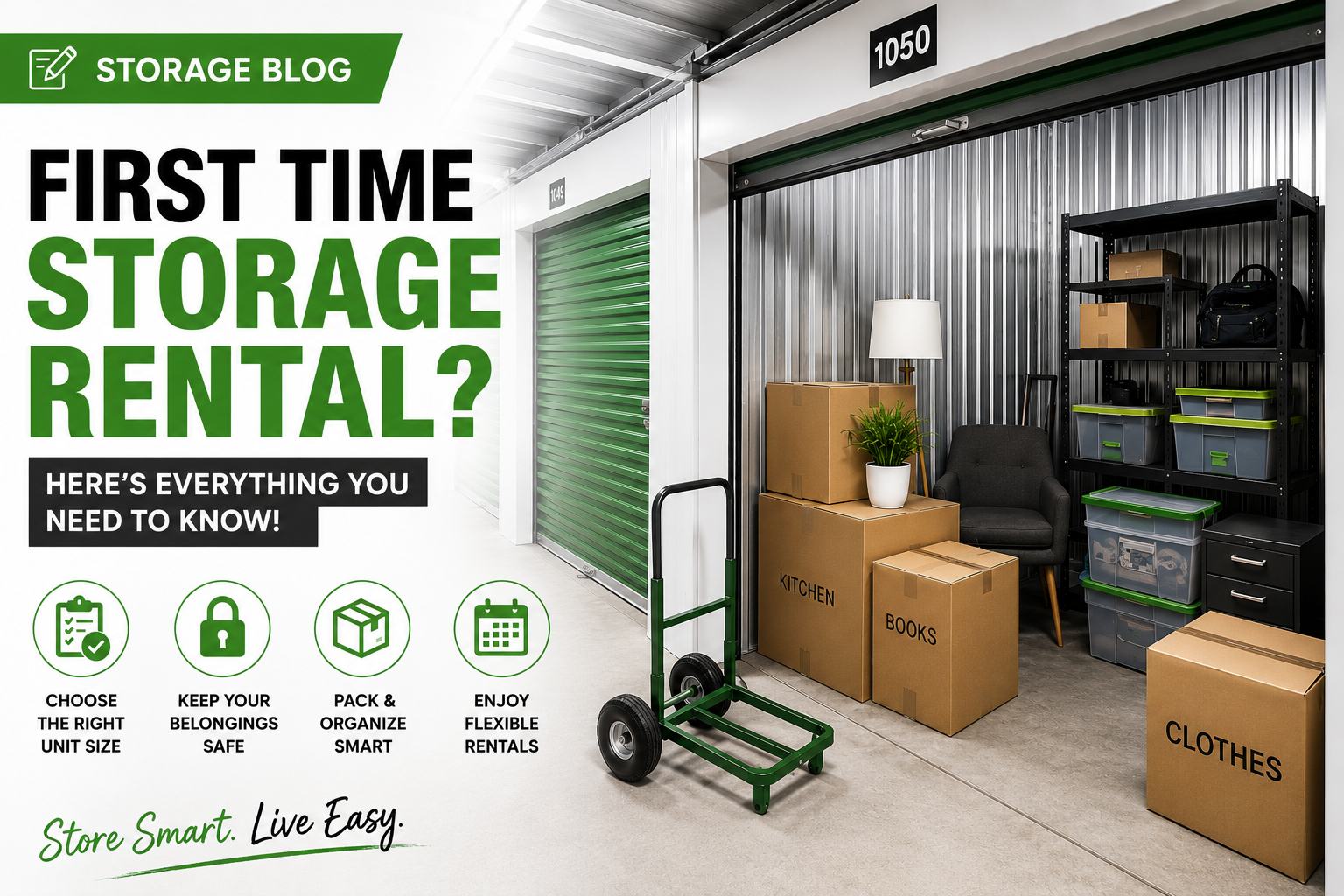
First-Time Storage Rentals in Lake Worth, Florida - Start Here
Renting a storage unit for the first time can feel more complicated than it needs to be. How big of a unit do you actually need? Should you pay extra for climate control? What's the process even look like? If you're in Lake Worth, FL and this is your first time storing your belongings outside your home, this guide walks you through everything before you ever set foot on the property — with a close look at the one decision that matters most in this part of Florida: climate control.
Step 1: Figure Out How Much Space You Actually Need
The single biggest mistake first-time renters make is guessing on unit size — usually paying for more space than they need, or realizing halfway through move-in that everything won't fit.
A rough guide:
- 5x5: A small closet's worth of boxes, seasonal decorations, or a few pieces of furniture
- 10x12: A one- to two-bedroom apartment's worth of furniture and boxes
- 10x20 to 10x25: A full house, garage contents, or business inventory and equipment
If you're still not sure, it's worth a quick call to the office before you book — a five-minute conversation about what you're storing can save you from renting the wrong size.
Step 2: Why Climate Control Deserves Extra Thought in Lake Worth
This is the decision most first-time renters underestimate, and it's the one worth slowing down for.
Lake Worth sits in South Florida, where summer heat routinely pushes into the 90s and humidity hovers well above what most of your belongings were ever designed to handle. A standard drive-up unit, while convenient, offers no protection against that. Over months of storage, heat and moisture can:
- Warp and crack wood furniture
- Corrode electronics, appliances, and metal parts
- Encourage mold and mildew on fabric, upholstery, and cardboard boxes
- Fade or damage photos, documents, artwork, and musical instruments
- Cause leather and vinyl to dry out, crack, or peel
Climate-controlled storage keeps temperature and humidity in a consistent range year-round**, which is the difference between opening your unit in six months to belongings that look the way you left them, versus belongings that have quietly degraded the entire time. If you're storing anything wood, leather, fabric, electronic, or paper-based, climate control isn't a luxury upgrade — it's the option that actually protects what you're paying to store.
Drive-up units still make sense for tools, outdoor equipment, and items that genuinely don't mind heat and humidity. But when in doubt, climate control is the safer call.
Step 3: Understand What's on the Property
Before you rent anywhere, it helps to know what to actually expect on-site. At Gator State Storage in Lake Worth, conveniently located near I-95, that includes:
- Climate-controlled Class A units with LED lighting, alongside standard drive-up units
- A gated, secured property with digital surveillance and high-power LED lighting monitoring the facility 24 hours a day
- Extended access hours, 6:00 am to 10:00 pm, seven days a week (with 24-hour access available for business accounts)
- A contactless gate system you can open with a text from your phone — handy when it's pouring rain and the last thing you want is to fumble with a keypad
- RV, boat, and trailer parking, covered and uncovered
Knowing this ahead of time makes your first visit feel a lot less like a leap of faith.
Step 4: Rent Online — No Appointment Needed
One of the more convenient parts of renting storage today is that you don't have to schedule an appointment or wait in an office. You can browse available units, including climate-controlled options, check current pricing, and reserve a unit entirely online. From there, you can manage your account and handle payments from your phone or computer — no counter visit required.
Step 5: Pack With the Long Haul in Mind, Not Just Moving Day
A few habits make a real difference once your things are actually in storage, especially in a climate-controlled unit where you're relying on the environment to do some of the work for you:
- Use sturdy, uniform boxes where you can — they stack better and protect contents more reliably than mismatched containers
- Leave a narrow walkway down the middle of the unit so you can reach items in the back without unpacking everything
- Store heavier, sturdier items on the bottom and lighter or more fragile items on top
- Avoid stacking anything directly against the walls to allow for airflow
- Label boxes on more than one side, since you won't always be able to see the top once units are stacked
Step 6: Think Ahead to Hurricane Season
If you're storing anything you'd hate to lose — important documents, family photos, electronics, or furniture you're not ready to part with — a climate-controlled unit also gives you a secure, weather-protected place to move belongings ahead of a storm, not just a place to store things you don't currently need. It's worth keeping in mind if you're a first-time renter deciding between unit types.
Ready to Get Started?
First-time storage rentals don't have to be complicated. Once you know your size and whether climate control makes sense for what you're storing, the rest is just packing the truck. Gator State Storage in Lake Worth offers climate-controlled and drive-up units, RV and boat parking, and a simple online rental process — so you can get set up without ever needing an appointment.
Reserve your climate-controlled unit online today at Gator State Storage in Lake Worth, or stop by the property near I-95 to see it for yourself.
